The Brain Behind Every Charge & Discharge Decision
Ingro's Battery AI Engine uses machine learning to maximize revenue, extend battery life, and predict failures before they happen, making every BESS decision so you don't have to.
The Brain That Makes Every BESS Decision
A battery energy storage system without intelligence is just an expensive box of chemicals. Battery AI transforms that box into a revenue-generating machine, continuously learning from every charge cycle, every market movement, and every temperature reading across your entire fleet.
It receives real-time data from Cloud EMS, feeds health analytics into Battery Passport for lifecycle tracking, and controls hardware through the Integrations layer, all as part of the unified AI Powered BESS platform.
Optimizes dispatch across multiple revenue streams every 5 minutes
Tracks cell-level health across thousands of cells in real-time
Predicts failures weeks before they happen
Manages thermal state proactively, not reactively
Forecasts renewable generation for optimal charge timing
Learns from every cycle, gets measurably better over time
The cost of running Batteries
without Intelligence
Most BESS installations operate on static schedules with reactive maintenance. The result: missed revenue, premature degradation, and expensive surprises.
Static dispatch locks you into one revenue stream. While your battery sits idle or underperforms, market prices shift every 5 minutes. Without AI, you cannot capture arbitrage, frequency regulation, and capacity payments simultaneously.
Without cell-level health monitoring and thermal-aware dispatch, batteries degrade faster than they should. Weak cells go undetected, C-rates ignore ambient conditions, and you lose 2-3 years of useful life.
Each unplanned outage costs INR 5-15 lakhs in lost revenue, emergency repairs, and penalty charges. Reactive maintenance means you only know about problems after they have already cost you money.
One loop, run every
five minutes
Battery AI senses, forecasts, decides, acts and learns, then does it all again with fresh data. Pick a step to see what happens inside it.
A day in the life of
an AI-run battery
Drag through the day to see where Battery AI charges, holds and discharges, and the reason behind each move.
- Price
- INR 10.2
- per kWh
- Battery
- 76%
- full
- Solar
- 0%
- of peak
- Mode
- Discharging
- right now
What Battery AI is doing
Discharging at the best prices
Discharges into the highest prices, with the C-rate set by container temperature to limit wear.
Illustrative day for a co-located solar and storage site. Prices, solar and charge levels are sample values to show the logic, not measured data.
Revenue Optimization Engine
Most BESS operators leave money on the table by dispatching against a fixed schedule. Our AI engine simultaneously optimizes across frequency regulation, energy arbitrage, and capacity markets, rebalancing your dispatch strategy every 5 minutes based on a 72-hour rolling forecast of weather, load, and market prices.
- Multi-market dispatch: simultaneously earns from frequency regulation, energy arbitrage, and capacity markets
- 72-hour rolling forecast using weather, load, and market price predictions
- Rebalances dispatch strategy every 5 minutes based on real-time conditions
- Revenue stacking across 3-4 streams vs. single-stream dispatch
- Exchange DAM/RTM bidding with price forecasting and ToD arbitrage
Result: 30-40% more revenue than static dispatch schedules through intelligent revenue stacking across 3-4 streams.
Battery Health Analytics
Every battery cell degrades differently. Without cell-level visibility, weak cells drag down entire strings, and you only find out when capacity has already dropped. Our AI tracks State of Health across thousands of individual cells, modeling degradation curves to predict remaining useful life with 95%+ accuracy.
- Cell-level SOH (State of Health) tracking across thousands of cells at 1-second resolution
- Degradation curve modeling predicts remaining useful life with 95%+ accuracy
- Identifies weak cells before they affect string performance
- Thermal-aware dispatch: adjusts C-rate (charge/discharge rate) based on ambient temperature to minimize degradation
- Adaptive charging profiles that evolve as battery chemistry ages
Result: 15-20% longer battery life compared to unoptimized dispatch, translating to years of additional revenue.
Predictive Maintenance
A single unplanned outage can cost lakhs in lost revenue and emergency repairs. Our AI continuously analyzes 200+ sensor parameters per container, detecting anomalies weeks before they become failures. When it finds something, it auto-generates work orders for your field teams, scheduled during low-revenue windows.
- 200+ sensor parameters analyzed continuously per container
- Anomaly detection catches issues 2-6 weeks before failure
- Automated work order generation for field teams
- Root cause analysis with actionable recommendations
- Fleet learning: failures at one site improve predictions across all sites
Result: 80% reduction in unplanned downtime. Failures at one site improve predictions across your entire fleet.
Smart Thermal Management
Thermal runaway is the nightmare scenario for every BESS operator. Our ML models predict thermal behavior under different dispatch scenarios, executing pre-cooling strategies before high-power discharge events and dynamically adjusting C-rates based on real-time thermal state, keeping every cell in its optimal temperature window.
- ML models predict thermal behavior under different dispatch scenarios
- Pre-cooling strategies activated before high-power discharge events
- Dynamic C-rate adjustment based on real-time thermal state
- Zone-based thermal control for uneven container loading
- Energy-efficient HVAC scheduling to minimize parasitic losses
Result: Significant reduction in thermal events, even during Indian summers with 45C+ ambient temperatures.
Renewable Forecasting
For co-located solar and wind BESS, charge timing is everything. Our ML-powered forecasting uses satellite imagery, weather models, and historical plant data to predict solar irradiance and wind speed, so your battery charges when renewable generation is peaking and avoids expensive grid draw during peak hours.
- Solar irradiance and wind speed predictions for co-located generation
- 15-minute resolution forecasting using ensemble weather models
- Cloud shadow tracking for rapid ramp event preparation
- Optimizes charge timing to capture maximum renewable generation
- Seasonal and long-term generation trend analysis
Result: Optimized charge timing captures maximum renewable generation, reducing grid draw during expensive peak hours.
Self-Improving Algorithms
Most software ships a static model and hopes it works. Battery AI uses transfer learning across the fleet, so a new site in Gujarat benefits from everything learned at sites in Rajasthan and Tamil Nadu from day one. A/B testing of dispatch strategies, OTA (Over-the-Air) model updates, and edge+cloud hybrid architecture mean your BESS gets smarter over time without a single site visit.
- Transfer learning across fleet: new sites benefit from existing fleet intelligence
- A/B testing of dispatch strategies across similar sites
- OTA model updates: your BESS gets smarter without site visits
- Edge+Cloud hybrid: critical decisions at edge (sub-second), optimization in cloud
- Reinforcement learning continuously refines dispatch strategies
Result: Your BESS gets measurably better every month. New sites reach optimal performance in weeks, not months.
Before vs. After Battery AI
The difference between a BESS that costs you money and one that makes you money.
Without Battery AI
- Fixed dispatch schedule set once, followed blindly
- Single revenue stream, leaving 30-40% on the table
- Reactive maintenance, you find out when it breaks
- Manual compliance reporting, days of paperwork
- No cell-level visibility, surprises at warranty review
- Static thermal settings regardless of conditions
With Battery AI
- Dynamic dispatch rebalanced every 5 minutes
- 3-4 revenue streams stacked simultaneously
- Predictive maintenance, issues caught weeks early
- Automated compliance, reports generated instantly
- Cell-level SOH tracking with 95%+ RUL accuracy
- ML-driven thermal management adapts in real-time
Does the AI run
my battery?
It decides, but it never has the last word. Three layers, each with its own job.
Proposes
Battery AI
Plans the next hours from forecasts, prices and cell health, and proposes how the battery should be used.
Enforces
Ingro EMS on site
Executes the plan and holds the site inside the limits you set: grid import and export, power, state-of-charge window.
Protects
Battery management system
Keeps its own hard limits on voltage, current and temperature, whatever the layers above ask for.
Autonomous, inside limits you set.
The question every owner asks is whether an AI should be trusted with a multi-crore asset. Battery AI never has the last word: it proposes, the controller on site enforces your limits, and the battery's own protection sits underneath both.
- You can overrideChange schedules or switch modes from the console at any time.
- Every decision has a reasonEach dispatch is recorded with why it was made, ready for audit and reporting.
- Site control without the internetIn on-site and hybrid deployments, control continues with no internet connection.
How AI Delivers Value
Per Deployment
Battery AI adapts its optimization strategy to the specific economics of each deployment type.
Grid-Scale BESS
Revenue stacking across CERC ancillary services, frequency regulation, energy arbitrage, and capacity markets running simultaneously.
Learn moreIndustrial Plant
AI predicts load 15 minutes ahead and pre-emptively shaves demand peaks before they hit your maximum demand meter.
Learn moreData Center
AI pre-positions SOC based on predicted compute load, ensuring seamless UPS-grade backup with zero transfer time.
Learn moreEV Charging Hub
Predicts charging demand patterns, optimizes BESS SOC for charger availability, and eliminates grid upgrade costs.
Learn moreMicrogrid
Forecasts community demand, prioritizes critical loads automatically, and maximizes self-consumption of local renewables.
Learn moreBattery AI Doesn't Work Alone
It's an add-on module of the Ingro EMS platform, connected to every other layer for end-to-end intelligence.
Cloud EMS
Real-time data feed from fleet dashboards, dispatch commands, and sensor streams flow into the AI engine.
ExploreBattery Passport
AI health analytics, degradation models, and maintenance history feed into lifecycle documentation.
ExploreIntegrations
AI dispatch commands flow through the integrations layer to control PCS, BMS, and thermal hardware.
ExploreAI Powered BESS
Ingro Brain (Battery AI) is an add-on module of the Ingro EMS platform, the intelligence layer.
ExploreOpen Access Energy
AI optimizes when to use open access power vs battery storage based on real-time pricing and forecasts.
ExploreThe platform it is built into
already runs real BESS
Battery AI is the intelligence layer of the same EMS platform that Ingro runs on grid-scale, industrial and EV-charging sites.
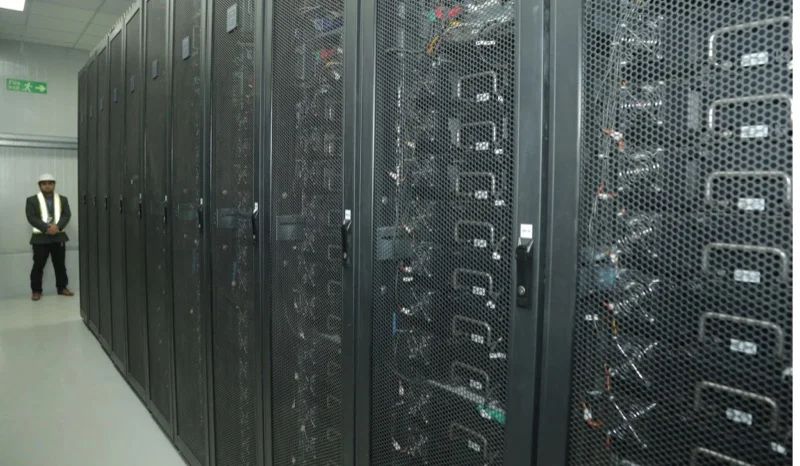 Grid-Scale BESS
Tata Power Delhi Distribution Limited (TPDDL)
India's First Grid-Scale BESS
EMS and SCADA partner. Ingro took over a legacy, vendor-locked platform.
10 MW / 10 MWh | 2+ Years on Ingro EMS | India's First Grid-Scale BESS
Read the project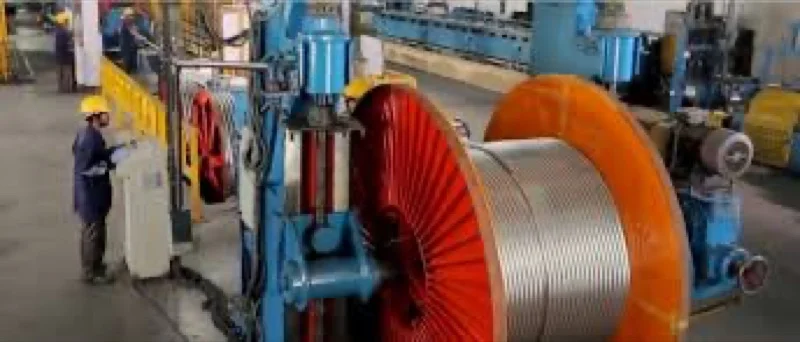 Industrial Energy Optimization
APAR Industries Limited
Industrial BESS Integration
End-to-end BESS for a manufacturing plant.
End-to-End BESS | Sub-1ms Response | 15+ Year Lifecycle Design
Read the project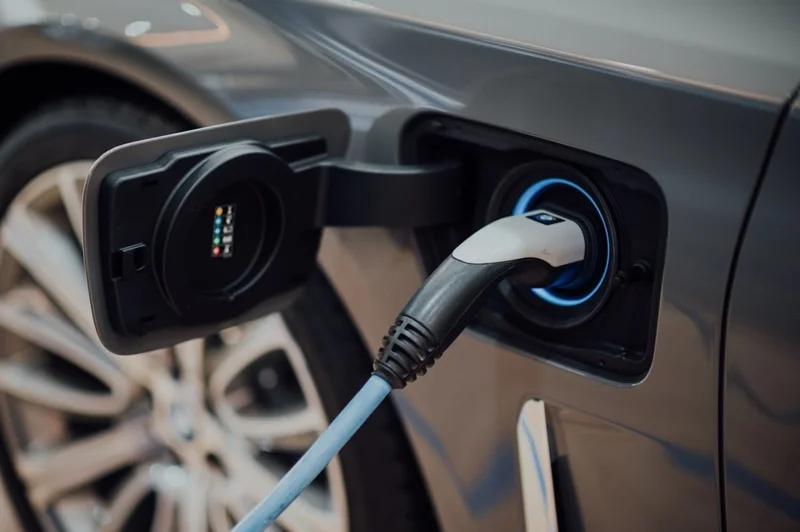 EV Charging Infrastructure
Jio-BP
EMS + BESS for EV Charging
EMS from edge BMS/PCS data to cloud monitoring.
EV Charging BESS | Real-Time BMS/PCS Monitoring | Cloud-Connected EMS
Read the projectA new battery starts with
what the fleet already knows
Ingro Brain learns across every site Ingro runs. Pick a chemistry and a climate to see which sites teach a new battery on day one.
Your new battery
Sites already running
- LFPSolar parkSolar shifting
- LFPSteel plantPeak shaving
- LFPPort warehouseBackup + ToD
- NMCHospitalBackup power
- LFPGrid substationArbitrage
- NMCEV charging hubPeak shaving
- LFPTextile millDiesel offset
- LFPHill microgridOff-grid
- NMCData centreUPS support
Same chemistry and climateSame chemistry
Learns from every LFP site, weighted to hot & dry sites like yours:
- How this chemistry ages in this kind of heat
- Which operating habits wear its cells fastest
- What the early signs of a failing cell look like
Your site
LFP battery, hot & dry
- 1Day one: starts from what similar sites have already taught the model, not from a blank page.
- 2Every day after: its own data tunes the model to its own cells, loads and weather.
- 3And back: what it learns improves the model for the next site.
Battery health guides
The science Ingro Brain is built on, in plain language
Battery AI,
Answered
What owners, operators and developers ask us most.
10 questions
Battery AI is the intelligence layer of Ingro's EMS. It forecasts weather, load and market prices, decides how the battery should charge and discharge, tracks the health of every cell, flags faults before they become failures, and keeps learning from every cycle across your fleet. Six jobs, one engine: revenue optimisation, battery health analytics, predictive maintenance, thermal management, renewable forecasting and self-improving algorithms.
Within limits you set. Battery AI proposes the plan; the on-site Ingro EMS controller enforces your site limits; the battery management system keeps its own hard protection underneath. Operators can change schedules or override modes from the console at any time, and every decision is recorded with its reason.
Battery AI analyses 200+ sensor parameters per container continuously and detects anomalies 2-6 weeks before failure. It generates the work order with a root-cause suggestion, scheduled in a low-revenue window so the repair does not cost you a peak. What it learns at one site improves predictions at every other site in the fleet.
Yes. Battery AI reads the plant and sends commands through Ingro's integrations layer, over Modbus TCP, Modbus RTU over RS485, SunSpec, IEC 61850, DNP3 and OPC-UA, plus dry contacts, digital I/O and aggregator gateways. It is manufacturer-independent, so it can run over batteries, PCS and SCADA already in service.
Battery AI uses transfer learning across the fleet, so a new site starts from what has already been learned at your other sites instead of from scratch. New sites reach optimal performance in weeks, not months, and model updates arrive over the air with no site visit.
A fixed dispatch schedule uses the battery for one purpose. Battery AI optimises across frequency regulation, energy arbitrage and capacity markets at the same time, using a 72-hour rolling forecast of weather, load and prices, and re-balances the strategy every 5 minutes. Stacking 3-4 revenue streams is what lifts revenue 30-40% over a static schedule. The result for a given site depends on its market, tariff and hardware.
By tracking state of health cell by cell and changing how the battery is used to match. Weak cells are found before they drag down a string, the C-rate (charge and discharge rate) is adjusted to ambient and container temperature, and charging profiles adapt as the chemistry ages. Together this is what gives 15-20% longer battery life compared with unoptimised dispatch.
Yes. Machine-learning models predict how each container will behave under the planned dispatch, so cooling can start before a high-power discharge rather than after the temperature has already risen. C-rates adjust to the real-time thermal state, zones are controlled separately when containers load unevenly, and HVAC is scheduled to limit parasitic losses, including through Indian summers above 45°C.
Critical decisions are made at the edge, in under a second, and heavier optimisation and model training run in the cloud. Ingro EMS is deployed on site (offline), in the cloud, or as a hybrid of the two. In on-site and hybrid deployments, site control continues with no internet connection.
Cloud EMS is the fleet console: live state, remote scheduling and alerts for every site. Battery AI is the intelligence that decides what the schedule should be and what the data means. They work together as two layers of the same AI Powered BESS platform: Cloud EMS supplies the data, Battery AI returns the decisions.
Still have a question?
Send us your site, hardware and tariff or tender, and an engineer will answer it.
Your Batteries Deserve
a Brain
Book a live demo and see Battery AI optimize a real BESS in real-time, revenue stacking, health tracking, thermal management, and predictive maintenance all working together.